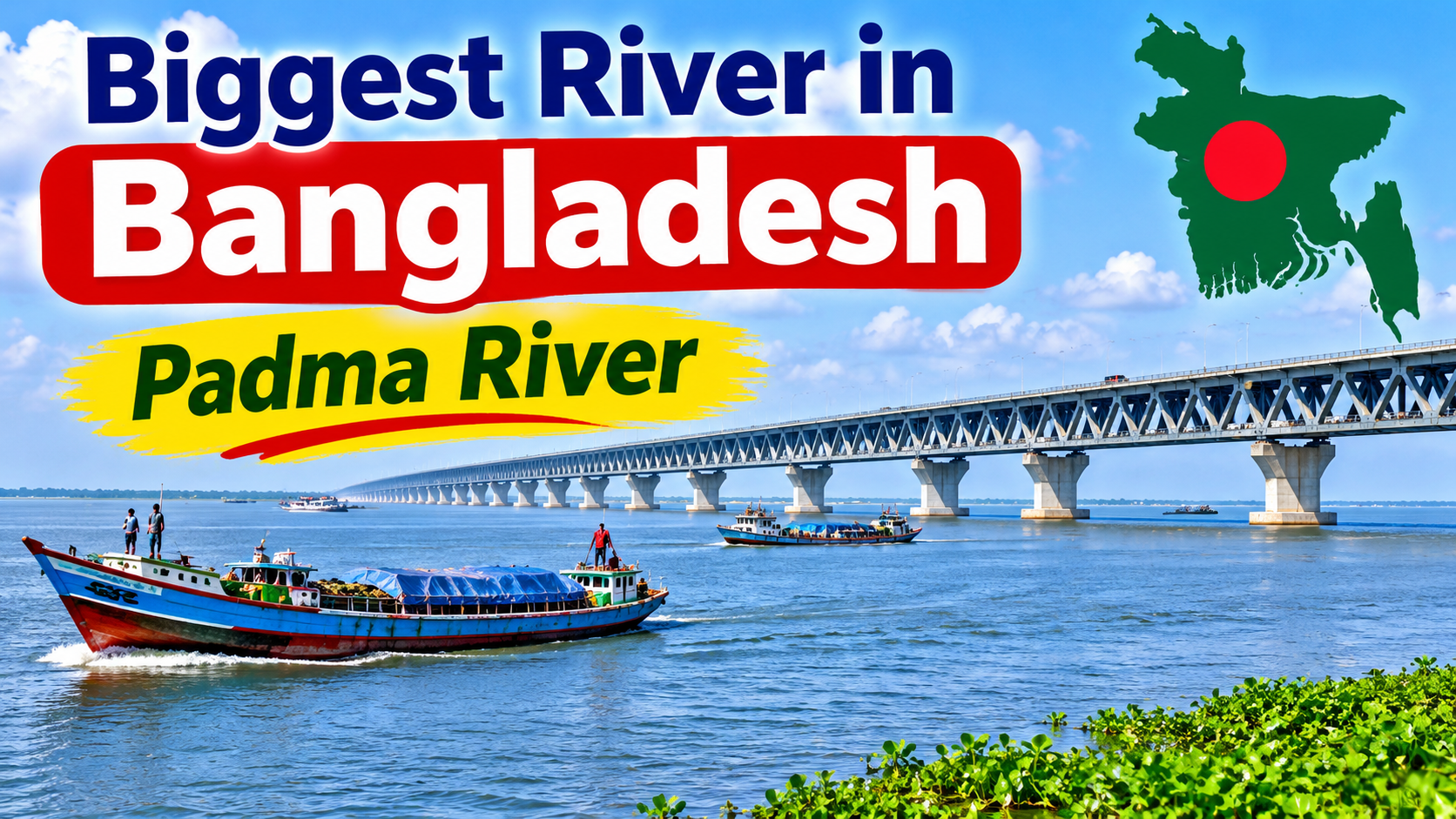
Bangladesh has an extensive network of rivers that supports agriculture, fishing, transportation and trade. These waterways also shape the country’s fertile plains, wetlands and coastal regions. Among them, the biggest river in bangladesh is an interesting geographical topic, particularly because river size can be measured by length, width or water flow.
The Meghna is the widest river flowing entirely within Bangladesh, reaching approximately 13 kilometres in width near Bhola. However, the Surma-Meghna system is recognised for its overall length. The Padma and Jamuna are also major rivers that contribute to the country’s natural and economic development.
সূচিপত্রঃ
Biggest River In Bangladesh: Which River Is It?
The Meghna is the widest river flowing entirely within Bangladesh. It plays an important role in the country’s drainage system and carries a substantial amount of water towards the Bay of Bengal.
However, the term biggest does not always mean widest. The Surma-Meghna system measures approximately 946 kilometres in total length, including around 669 kilometres within Bangladesh. This distinction helps explain why the Meghna is associated with width, while the connected Surma-Meghna system is recognised for its length.
The Padma and Jamuna are two other major rivers. The Jamuna is the main channel of the Brahmaputra in Bangladesh, while the Padma is formed after the Ganges meets the Jamuna. The Padma later joins the Meghna near Chandpur.
Meghna River: Origin, Length and Location
The Meghna is one of the principal rivers of Bangladesh and an important part of the Ganges-Brahmaputra-Meghna river system.
Origin and Formation
The river system begins with the Barak River in northeastern India. Before entering Bangladesh, the Barak divides into two branches: the Surma and Kushiyara. These rivers flow through northeastern Bangladesh and eventually meet near Bhairab Bazar in Kishoreganj District, forming the Upper Meghna.
Length and Width
The Meghna is particularly known for its width, which reaches approximately 13 kilometres near Bhola. Its width changes along different sections depending on the river’s course and seasonal conditions.
The approximately 946-kilometre measurement refers to the connected Surma-Meghna system, not just the individual Meghna channel. During the monsoon, increased rainfall and upstream water flow cause the river’s water level and volume to change.
Location and Course
The Meghna flows through central and southern Bangladesh. After forming near Bhairab Bazar, it continues southward and meets the Padma near Chandpur. Their combined water eventually reaches the Bay of Bengal through the Lower Meghna and its coastal channels.
Five Major Rivers in Bangladesh
Bangladesh has several important rivers, each with a different geographical and economic role.
1. Meghna River
The Meghna is the widest river flowing entirely within Bangladesh. It supports fishing, agriculture and inland transportation while contributing to the country’s coastal ecosystem.
2. Padma River
The Padma is the downstream continuation of the Ganges after it meets the Jamuna near Goalanda. It supports irrigation, fishing and transportation. The Padma Bridge is also an important road and rail connection between southwestern and central Bangladesh.
3. Jamuna River
The Jamuna is the main channel of the Brahmaputra in Bangladesh. It has a braided channel system with several branches and sandbars. Its changing course contributes to riverbank erosion and the formation of chars.
4. Brahmaputra River
The Brahmaputra originates in Tibet and flows through India before entering Bangladesh. Its water contributes to the Jamuna and supports agriculture, freshwater resources and floodplain ecosystems.
5. Karnaphuli River
The Karnaphuli flows through southeastern Bangladesh and reaches the Bay of Bengal near Chattogram. It is important for Chattogram Port and supports hydroelectric power generation through the Kaptai Hydroelectric Power Station.
Comparison of Major Rivers in Bangladesh
| River | Main feature | Importance |
| Meghna | Widest river flowing entirely within Bangladesh | Fishing and transportation |
| Padma | Connected with the Ganges and Jamuna | Agriculture and trade |
| Jamuna | Main channel of the Brahmaputra | Water flow and floodplains |
| Brahmaputra | Major transboundary river | Freshwater resources |
| Karnaphuli | Important southeastern river | Port activities and hydropower |
These rivers cannot be ranked using one measurement alone. Their geographical importance depends on factors such as length, width, water discharge and the regions they serve.
Why Are Rivers Important to Bangladesh?
Rivers are closely connected with Bangladesh’s economy and natural environment. Their contributions extend beyond supplying water.
- Agriculture: River water supports irrigation, while deposited sediment helps maintain fertile agricultural soil.
- Fishing: Rivers provide habitats for freshwater fish and support fishing communities. The Meghna is particularly important for hilsa fishing.
- Transportation: Boats, ferries and cargo vessels connect different districts and carry passengers and commercial goods.
- Trade: River ports and waterways support domestic transportation and commercial activities.
- Electricity: The Karnaphuli supports hydroelectric power generation through the Kaptai Dam.
- Biodiversity: Rivers, wetlands and floodplains provide habitats for fish, birds and other wildlife.
Major Problems Affecting Rivers in Bangladesh
Despite their importance, Bangladesh’s rivers face several environmental challenges.
Riverbank erosion: Strong water currents gradually remove soil from riverbanks, affecting homes, farmland and settlements, particularly along the Padma and Jamuna.
Seasonal flooding: Heavy monsoon rainfall and upstream water flow can cause floods that damage crops, roads and houses.
Water pollution: Industrial discharge, untreated sewage, plastic waste and agricultural chemicals affect river water quality and aquatic life.
Climate change: Changing rainfall patterns, extreme weather and sea-level changes create additional pressure on freshwater resources and coastal ecosystems.
Better waste management, river protection and responsible water resource planning are necessary to address these problems.
Interesting Facts About the Rivers of Bangladesh
- The Meghna is the widest river flowing entirely within Bangladesh.
- The Surma-Meghna river system measures approximately 946 kilometres.
- The Meghna meets the Padma near Chandpur.
- The Jamuna is the main channel of the Brahmaputra in Bangladesh.
- The Ganges, Brahmaputra and Meghna contribute to one of the world’s largest delta systems.
- The Karnaphuli supports hydroelectric power generation.
- River erosion and sediment deposition contribute to the formation of chars and sandbars.
Wrapping Up
Bangladesh’s rivers play an essential role in shaping its geography, supporting its economy and sustaining millions of livelihoods. The Meghna is especially important because of its remarkable width, while the Surma-Meghna system is recognised for its overall length. The Padma, Jamuna, Brahmaputra and Karnaphuli also contribute significantly to the country’s natural resources.
Understanding the biggest river in bangladesh means looking at more than just its size. These waterways support communities, maintain ecosystems and connect different parts of the country. Protecting them from pollution, erosion and other environmental pressures is essential for preserving Bangladesh’s natural resources for future generations.
Frequently Asked Questions (FAQs)
Q1. What is the biggest river in Bangladesh?
The Meghna is the widest river flowing entirely within Bangladesh. It reaches approximately 13 kilometres in width near Bhola.
Q2. Which is the longest river system in Bangladesh?
The Surma-Meghna system is commonly recognised as the longest river system in Bangladesh, measuring approximately 946 kilometres.
Q3. Which is the widest river in Bangladesh?
The Meghna is the widest river flowing entirely within the country, particularly near its lower course around Bhola.
Q4. Where does the Meghna River originate?
The Meghna forms near Bhairab Bazar in Kishoreganj District, where the Surma and Kushiyara rivers meet.
Q5. Where does the Meghna meet the Padma?
The Meghna meets the Padma near Chandpur in southern Bangladesh. Their combined water flows towards the Bay of Bengal.
Q6. Why are rivers important to Bangladesh?
Rivers support agriculture, fishing, transportation, trade and electricity generation. They also maintain wetlands, fertile floodplains and aquatic habitats.